
Building an engaged and experiencial culture

-
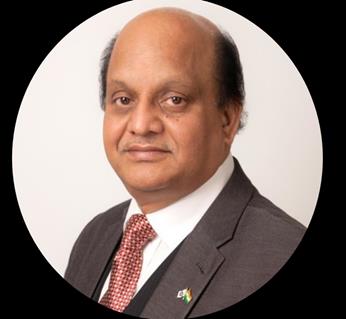
Author: Dr. Chandra Mauli Dwivedi
-
30 Nov, -0001
DRIVE BUSINESS SUCCESS & ENHANCE EMPLOYEE PRODUCTIVITY
THROUGH ENHANCED EMPLOYEE’s ENGAGEMENT:
It has become extremely critical for any progressive organization to build a transparent
work culture to attract and retain performers and achievers across the level. Current
workforce is keen to align their values with their organization.
Changing culture is an ongoing process. Best employers worked for long years to
inculcate and establish a positive work culture. Some of the experiential approach in
crating and open work culture:
Employee engagement is vital to an organization's success. High engagement leads
to increased profitability, reduced turnover, and increased productivity.
In 2020, organizations saw elevated engagement levels, with 77% of
employees reporting high engagement. But after the initial onset of the
pandemic, engagement levels declined and turnover rates soared.
Please note: This website includes an accessibility system. Press Control-F11 to adjust
the website to the visually impaired who are using a screen reader; Press Control-F10
to open an accessibility menu.
Accessibility
Industries are increasingly recognizing the importance of Employee engagement as a
crucial element for overall organizational success. Engaged employees are more likely
to be productive, innovative, and provide excellent customer service, leading to
improved customer experiences.
Industries are evolving to prioritize employee engagement in various ways:
Employee Feedback and Voice: Feedback mechanisms and channels for employee
voice are gaining prominence. Organizations are leveraging tools such as surveys and
regular check-ins to collect feedback from employees and address their concerns.
Actively seeking and incorporating employee perspectives helps in creating a sense of
ownership and involvement, leading to higher engagement levels.
Holistic Approach: Businesses are adopting a more holistic approach to employee
engagement by considering various factors that contribute to overall satisfaction and
motivation. This includes factors such as work-life balance, career development
opportunities, recognition and rewards, and a positive work environment. Companies
are focusing on creating a supportive culture that values employees’ well-being and
personal growth.
Technology and Digital Solutions: Technology plays a significant role in enhancing
employee engagement. Organizations are leveraging digital tools and platforms to
facilitate communication, collaboration, and knowledge sharing among employees.
These solutions provide opportunities for remote work, flexible schedules, and virtual
team-building activities. Additionally, technology-driven recognition and rewards
programs are being implemented to acknowledge employee contributions effectively.
Learning and Development: Continuous learning and development programs are
being emphasized to engage employees and support their professional growth.
Organizations are investing in training initiatives, mentoring programs, and skill-building
workshops. By providing opportunities for employees to enhance their skills and
knowledge, businesses foster a sense of fulfilment and job satisfaction.
Leadership and Employee Empowerment: Effective leadership is crucial for driving
employee engagement. Companies are focusing on developing managers who can
inspire and motivate their teams. Leaders are encouraged to empower employees by
delegating responsibility, encouraging autonomy, and recognizing their achievements.
This shift in leadership style promotes trust, collaboration, and a sense of purpose
among employees.
Diversity, Equity, and Inclusion (DEI): DEI initiatives are gaining traction in employee
engagement strategies. Businesses are promoting diversity and creating inclusive
environments where employees feel valued and respected. Recognizing and
celebrating differences among employees helps foster a sense of belonging, resulting in
increased engagement and productivity.
Nurturing Engagement Through Shared Values: Experience.com’s path to
Success
Cultivating Employee Engagement is Experience.com’s approach to building a culture
of Commitment. We go beyond job satisfaction and tap into an employee’s emotional
commitment and dedication to their work and the organization.
We place a stronger emphasis on employee engagement as a strategic priority in which
our Leaders and Senior Executives actively demonstrate their support by championing
employee engagement programs and leading by example. Their visible commitment
sets the tone for the rest of the organization.
Our core values serve as the bedrock of the organization’s culture and identity. These
values define the principles and beliefs that guide the behaviours, decisions and
interactions of everyone within the company. By aligning these values with the
employee engagement, Experience.com fosters a work environment where employees
feel connected, motivated and committed to their work and the organization’s success.
HR must take a Lead:
HR must initiate and discuss with employees through town hall meetings, climate
surveys and open forums. The first steps are to understand as what is needed and how
to evolve which is aligned with company’s values and mission.
Business Leaders should also discuss the kind of culture they want their company to be.
The culture must inspire employees to work harder, think out of the box, build creativity
and innovations and ensure work-life balance.
Company culture is always an integral part of business. According to research by
Deloitte, 94% of executives and 88% of employees believe a distinct corporate culture is
important to a business’ success. Deloitte’s survey also found that there is a strong
correlation between employees who claim to feel happy and valued at work and those
who say their company has a strong culture.
Companies who are employers of choice tend to have strong, positive work cultures that
help employees feel proud and perform their best at work.
- Talent Acquisition: HR professionals agree that a strong brand and culture is one of the best ways to attract talents. A positive culture gives an organization a competitive advantage. Workforce wants to work for companies with a better reputation. A company with an open and positive culture will attract talent that is willing to make their long term career.
- Retention of Employee: Positive work culture help attracting and retaining great talent for the company. A positive culture fosters a sense of employee loyalty. Employees are much more likely to stay with their current employer when they feel they are treated well and enjoy going to work every day.
- Job Enrichment: Employee with an open culture contributes more significantly as they enjoy and feel happy with the work and support they get from seniors. Employers who invest in the well-being of their employees will have engaged and dedicated employees.
- Governance:Employees are much more likely to adhere to the ethics and values of the companies and also encourage teamwork and open communication. This finally leads to better coordination and collaboration.Building a positive culture can be done with any size of the and across the industry. Employers must invest time and efforts in the happiness and well-being of their workforce, a positive culture will grow and sustain. Employers can use the following tips to help build a positive corporate culture at their
workplace:
Employee wellness.
Employee wellness is the fundamental for a positive corporate culture. Employer must
ensure that employees have the resources and healthcare opportunities they need to
live their healthy life for better outcome.
Employee must be communicated that how their roles positively impact the company
and its valued clients.
Collective goals.
Employers should have meetings and sessions to communicate their goals and
objectives and take onions of employees. Creating a company goal brings employees
together and gives everyone a sense of belongingness.
A positive workplace culture enhances team work and increases productivity and
efficiency. It enhances retention of the workforce. Job satisfaction, collaboration, and
work performance are all enhanced. It is well established fact that well defined business
strategy creates a positive work culture.
Ownership and a sense of pride come from a positive work culture. When people take
pride, they invest their future in the organization and work hard to create opportunities
that will immensely benefit the organization. Employer must recognize and encourage
such leaders who are actively striving towards creating a positive work culture and
inspiring others around them.
HR must work as a change manager and a transformational leader.
A top down approach to building company culture no longer works for several reasons.
For one, Covid-19 has upended how leaders interact with employees and how
coworkers connect with each other. Next, company culture has grown in
importance,...more
handled in the past: The CEO commissions the Human Resources department to
produce an effective company culture. HR designs a campaign to tout a mission
statement and core values that the CEO and senior management developed. HR also
implements some employee perks like free snacks in the break room or monthly
birthday celebrations. Maybe they also field an annual employee engagement survey
and report results back to the CEO. And then with their culture-building to-do lists
completed, the CEO and HR move on to other priorities.
This approach no longer works for several reasons. For one, Covid-19 has upended
how leaders interact with employees and how coworkers connect with each other. The
need to adapt quickly and remain flexible during the pandemic has also revealed the
ineffectiveness of a top-down leadership approach. Next, company culture has grown in
importance, thanks to recent high-profile culture crises such as those at Uber and Wells
Fargo, the intensified push for DEI (diversity, equity, and inclusion), and the continuing
battle for talent. Culture has become a strategic priority with impact on the bottom line. It
can’t just be delegated and compartmentalized anymore.
A new culture-building approach is already in place at some organizations, one in which
everyone in the organization is responsible. Importantly, this model doesn’t relegate
culture-building to an amorphous concept that everyone influences but no one leads or
is accountable for. Shared responsibility for culture throughout an organization involves
different people and functions within the organization playing different roles in
developing and maintaining the culture.
In this context, culture can be defined as the ways people in the organization behave
and the attitudes and beliefs that inform those behaviors (i.e., “the way we do things
around here”) — including formal, stated norms as well as implicit ways people work
and interact. At many organizations there is a gap between the existing culture and the
“desired” culture — the culture needed to support and advance the company’s goals
and strategies. In a new culture-building model, everyone is responsible for cultivating
the desired culture.
This approach assigns different roles in defining and developing the culture. This
happens through formal roles as well as informal spheres of influence and reflects how
organizations actually operate these days. It also establishes clear accountabilities for
results. While the actual implementation of this approach may vary based on the type,
size, age, and structure of the organization, the general distribution of responsibility is
like this:
1. Board of directors: Guide the definition and development of the desired culture,
ensuring that it aligns with business goals and meets the needs of all
stakeholders.
2. CEO and senior management team: Define the desired culture and cultivate it
through leadership actions including setting objectives, strategies, and key
results that prioritize culture-building; and designing the organization and its
operational processes to support and advance the company’s purpose and core
values.
3. Human Resources department: Design employee experiences that interpret
and reinforce the desired culture. Also, implement strategies and programs that
enable the rest of the organization to fulfill their culture responsibilities, such as
offering training programs that develop leader capacity for culture-building and
employee engagement; and developing culture guidebooks, processes such as
performance management, and systems such as rewards and recognition
programs that nurture the desired culture.
4. Compliance, Risk, and Ethics department: Provide input to the CEO and
senior management team on the definition of the desired culture from the
perspective of ethics and risk. Also, ensuring that execution on the desired
culture across the organization aligns with the company’s risk management
strategies through tools such as ethics decision trees, processes such as a
whistleblower program, and systems such as compliance monitoring that align
with the desired culture.
5. Middle managers: Deliver employee experiences that interpret and reinforce the
desired culture. Also, implementing culture-building strategies, cultivating
employee engagement with the desired culture, and fulfilling the culture-building
responsibilities of employees.
6. Employees: Provide input to the CEO and senior management team on the
definition of the desired culture and culture-building programs and tactics by
providing insights on how the desired culture aligns with or differs from the actual
culture, customer perspectives, and employee needs and expectations.
Employees should provide feedback on existing culture-building efforts and ideas
for new ones. Also, creating, adhering to, and enforcing routines and norms that
interpret the desired culture; and aligning their attitudes and behaviors with the
desired culture.
The Roles of Boards and Middle Managers
In this new distribution of culture-building responsibilities, let’s look at two groups that
may be less well-understood: the board of directors and middle managers.
Board of Directors
Culture can be an asset as well as a risk to an organization. As Sir Adrian Montague,
former Chairman of Aviva plc, says, “Culture is the glue that binds an organization
together. It has a very significant impact on the firm’s effectiveness, ethics, and
governance. How could a board not have a view on the fitness for purpose of the firm’s
culture?” And yet, according to the Financial Reporting Council, boards of directors are
often not actively engaged in culture-building.
What’s more, the average CEO tenure has decreased relative to board member tenure
and is now approximately five years (vs. over twice that length for board members),
according to an article in HBR and CGLytics. So, boards have a greater longitudinal
perspective to inform the purpose of the company and to assess the organization’s
delivery on it. And strategy+business reports that boards of directors are increasingly
expected to enforce accountability on issues such as purpose, mission, and core
values.
So, the board must play a more active role in culture-building. It should guide the
definition and development of the desired culture, ensuring that it aligns with business
goals and meets the needs of all stakeholders. The board carries out this responsibility
by:
- Designating culture as a regular agenda item during board meetings
- Engaging ongoing conversations with the CEO/owner and the leads of Human
Resources and Compliance, Risk, Ethics, and DEI about culture priorities,
strengths, gaps, and challenges
- Commissioning culture audits and assessments and reviewing results and
indicated actions
- Considering culture leadership capabilities in succession planning and senior officer recruitment
- Vetting and approving public statements about the organizational culture
At the nonprofit WaterAid, the board has been highly instrumental in ensuring the
organization’s performance is aligned to its values. Board members regularly engage in
conversations — with executives, among board members, and with staff in seminars on
particular issues — about the changing context of the organization’s work and what it
means for achieving its vision and strategy.
TalkTalk, the British telecom, provides another example of how a board exerts culture-
shaping responsibilities. After a data breach crisis prompted widespread culture change
at the company, board members began asking questions about risk differently. Instead
of narrowly focusing on their technical responsibilities and simply asking, “Are we safe?”
directors adopted broader oversight for the organization’s culture and enhanced
influence on risk management. By asking “What risks are we taking and how can they
be minimized?”, directors are able to make more informed judgements about the level of
risk the company embraces.
Middle Managers
Leaders in the middle layers of an organization’s hierarchy, such as department
managers, store managers, and program leaders, wield the most influence on
employees’ daily experiences, so they play a critical role in company culture. But middle
managers in many organizations are not usually empowered to influence culture to the
degree that higher-level leaders are — and they’re often overlooked in culture-building
efforts.
Middle managers can and should play a critical role in cultivating the desired culture by:
- Ensuring the tools, environment, and intangible aspects of employees’ day-to- day worklife represent the company’s employee experience strategy
- Applying the organization-wide culture-building objectives, strategies, and key results to the context of their group or function
- Conducting coaching and training with employees to cultivate their engagement with the desired culture
- Communicating and role-modeling the desired culture
I was struck by the critical influence of middle managers on culture-building in a case
study on a major oil producer presented in a paper published in Organization Science.
While a corporate culture-change initiative met with resistance from employees for
whom the old culture and processes were ingrained, one operating unit successfully
adopted the new culture thanks to its savvy management team. These managers
established accountabilities for certain actions, sanctioned other behaviors, and devised
and enforced new metrics in support of the new culture. They were able to get traction
where the organization’s senior leaders weren’t because their methods for culture-
building were commensurate with their roles as middle managers.
Produce Results Through Shared Responsibility
With each group or function embracing its culture-building responsibilities, a healthy,
well-aligned, effective culture improves business performance results. That’s what Old
Mutual Wealth found back in 2012. In its efforts to recover from the financial crisis, the
firm’s board drove the redefinition of the corporate purpose and mandated the senior
management team pursue it.
To cultivate a customer-centric culture, executives set a new strategy to bolster
customer experience, created a new group customer director role, and identified
organization-wide customer-first behaviors that were incorporated into employee
performance reviews, manager feedback systems, and an all-employee survey. To
further operationalize the values of the new culture, they rolled out a new group
operating model and new governance models were created.
The widespread changes spawned a new culture throughout the organization in which
everyone took responsibility for their decisions, starting with the CEO who made clear
that nobody would be blamed for giving him bad news. Within 12 months, 90% of the
firm’s UK and European insurance books were replaced by new products aligned to the
board’s vision. And Old Mutual’s share price more than doubled in five years.
Embrace the Changes and New Requirements of Culture
The shift to a culture-building approach based on shared-responsibility both
reflects and requires changes in the nature of organizational culture and its impact on
the business.
The new approach shows that organizational culture has become less a code
established by leaders and more of a toolkit for all to draw from and input to. As the
authors of a recent Stanford Social Innovation Review paper observe, “Culture persists
only because people act in ways that uphold its principles and codes.” As employees
engage with the culture as a resource from which to shape their skills and habits instead
of a mandate decreed by top managers, culture becomes “expressed and reified
through practice.”
A company’s culture needs to be adaptable. There are many external factors exerting
pressure on any business as well as internal changes such as leadership transitions
and expansions. The culture needs to change to keep up with these changes. Attempts
to lock in a certain type of culture over the long term at best will fail; at worst, they will
hinder the organization’s competitiveness and sustainability.
This points to a key requirement of the shared-responsibility approach to culture-
building. Changes to the culture must be explicitly communicated and vetted by all.
Everyone may not agree with the changes, but they must understand them and agree to
support them.
To achieve the desired culture, everyone must have a clear, consistent, common
understanding of it — and everyone must work together in a deliberate and coordinated
effort to cultivate it. While each person or group is accountable in their own way,
everyone shares accountability for achieving the desired culture.
The new job of the CEO and senior management team is not to hand company culture
down from on high but to prioritize it and allocate the resources to ensure it.
FAQ
Frequently Asked Questions
What services does Digital Quantum offer?
Digital Quantum provides a wide range of services including data engineering, cloud solutions, AI, experience-led design, business consulting, application services, and security solutions to support digital transformation for businesses.
How does Digital Quantum approach digital transformation?
We adopt an experience-led design thinking approach that places customer experience at the center. By leveraging advanced technologies, we create tailored strategies that drive innovation, improve efficiency, and ensure sustainable growth.
Can your solutions be customized to our business needs?
Yes! Our services are fully customizable to fit your unique business requirements. We work closely with clients to understand their goals and create solutions that deliver the best outcomes.
How secure are the services you provide?
Security is a top priority for us. We offer comprehensive security solutions, including threat detection, data protection, and compliance services, ensuring that your business stays protected against evolving cyber threats.